Fake-o-Meter: Using AI to turn Confusing Claims into Clear Conversations
,The cat and mouse game of creating and debunking disinformation has become a key issue of the digital age. AI plays a role on both sides: It's frequently used to promote false narratives – but it also helps to detect and understand them. The Fake-o-Meter project aims to create an AI-driven companion that lets users dissect current events, hot topics, and reliably navigate today's ambivalent information landscape.
The mission
While fact checking websites are invaluable instruments in the fight against disinformation, they don't allow for much interaction or discourse. Fake-o-Meter aims to fill that gap by enabling users to discuss things they've seen, heard, or thought about – whether from their own perspective or that of friends, family, or neighbours. The goal is to create a chatbot where people can upload photos, videos or audio, throw in the "weird‑uncle" arguments they've picked up, and confirm or debunk claims in real time. The project plans to pair selected AI tools that help both media professionals and citizens to spot deepfakes and manipulated content with a controlled Large Language Model that adapts to your conversational style, explains terminology, unpacks political context, and guides the conversation at your own pace.
In doing so, Fake-o-Meter wants to help navigate uncertainty and establish trust. The project officially started in May 2026 and will be run for 34 months, i.e. until February 2029. It is funded by the Federal Ministry for Research, Technology and Space (BMFTR).
The consortium and our role in the project
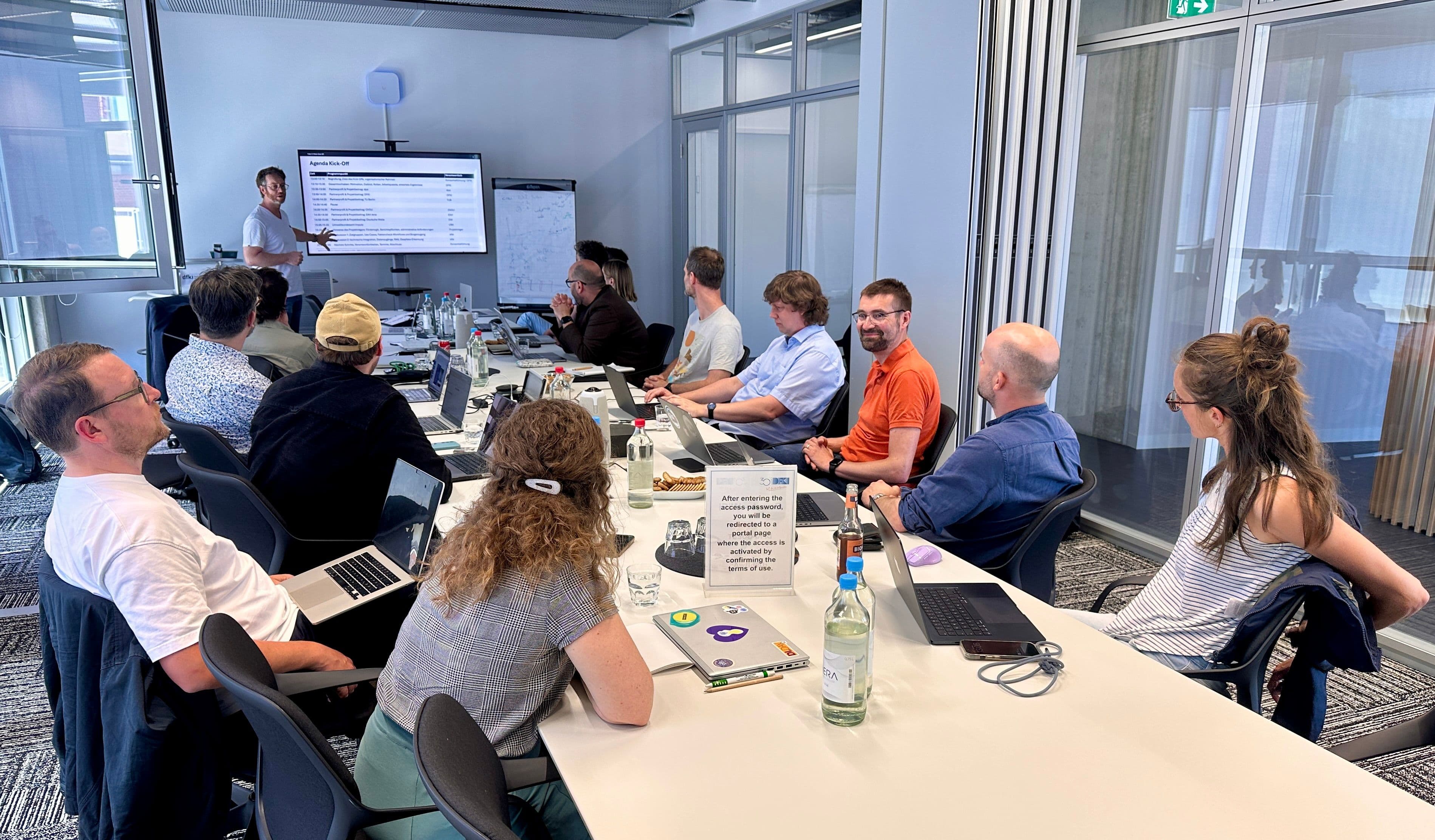
There are six partners involved in Fake-o-Meter:
The German Research Center for Artificial Intelligence – DFKI coordinates the project, provides technical expertise and infrastructure, and will develop relevant tools and technologies in cooperation with teams at Technical University Berlin and Otto-von-Guericke-University Magdeburg.
Ernst-Abbe-Hochschule Jena will focus on understanding the communication styles and strategies of extremists in Germany. Their aim is to develop counter-measures and foster effective communication and information strategies for citizens.
The German Press Agency – dpa contributes its expertise in fact-checking and verification, providing evidence-based insights and arguments to support the development of conversational AI. They will develop programs and manuals offering professional training for journalists and media literacy initiatives for citizens, helping both groups navigate the pitfalls of biased narratives and disinformation.
DW will support dpa's work – and shape Fake-o-Meter's vision into a practical toolbox for media creators. This means doing what we do best: developing hands-on use cases, evaluating technologies, and exploring how these can contribute to a broader understanding of the disinformation challenges we all currently face.
Key Visual: Egor Komarov on Unsplash.